Seating layouts
Your jobOpen each layout in turn and find the one that fits your next lesson.

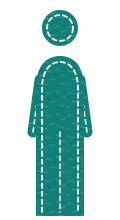



Let the task choose the layout. Most rooms need more than one in a week.
Best for
- Working alone: writing, practice questions, tests.
- Explaining something new, or a demonstration at the front.
- A group that has not settled yet.
Watch for
- The back row is asked less and joins in less. Walk the room, or swap rows round.
- Talk is awkward. Ask learners to turn their chairs for a pair task.
Who it suits
- Learners who are easily pulled off task by the people beside them.
- Learners who find group work tiring or worrying.
Your jobFind the learner you have in mind, and read where to start. Ask them first.
Ask the learner first. These are places to start, not rules.
Easily distracted
Near the front, away from the door and the window.
Fewer things to look at, and you are close enough for a quiet word. Not as a punishment.
Hard of hearing, or lip-reads
Where they can see your face and most other faces.
Keep them away from noisy kit, and do not talk while facing the board.
Anxious, or needs things to stay the same
The same seat each week, at the edge, with a clear way to the door.
Knowing where they will sit is one less thing to think about on the way in.
Rarely speaks
Front and middle, or wherever you stand most.
Learners there are asked more and answer more. Or move yourself to them.
Uses a wheelchair or a walking aid
On a clear route, with a choice of places.
Not always the same corner by the door. Check the desk height too.


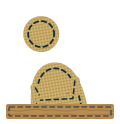

Your jobSay the script out loud once, so the words are yours.
The words to say




“From today we sit in a new plan. It is for the work we are doing, not about anyone. We will try it for two weeks, then look at whether it helps. If a seat does not work for you, tell me quietly.”
Try it for two weeks, then look
- Day 1Put the plan on the board before they arrive. Say the script at the door.
- Week 1Keep it. Move a seat only if it plainly fails.
- Week 2Look: who is off task, who is speaking, who has gone quiet. Change one seat, not all of them.
The one-minute move

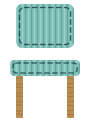
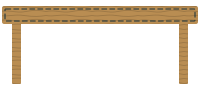
- Say the next layout and the time before anyone stands: “Chairs round to your tables in one minute.”
- Put the new plan on the board.
- Stand where the move is slowest, and have the first task ready.
Why this works in your room
Seats chosen for the task, and changed once with a reason, are one less thing to argue about.




For your learners
They sit where the task works for them, and a change comes with a reason and a date to look again, not as a surprise.
For you
You change one thing for two weeks and then look, and not every seat every time the room feels off.
Elsewhere in Bradford ThreadWorks
 Big 4Breakout rooms in Teams, for groups working online.Open Big 4 (opens in a new tab)
 WalkThrusTalk, projects and independence: structured discussion.Open WalkThrus (opens in a new tab)
Prompts to paste into Copilot
Copilot can turn a task and a room into a plan to try. Use numbers or initials, never learners' names. Change what is in brackets.
A layout for this lesson
I teach [subject] to [number] learners in a room with [describe desks and space]. The lesson has three parts: [part one], [part two], [part three]. Suggest the best seating layout for each part, and the quickest way to move between them. Keep it to six lines.
Groups for a project
I need to put [number] learners into groups of [size] for [task]. I will describe them by number, not name: [for example, 1 is confident, 2 is quiet, 3 is often absent]. Suggest groups that mix confidence, and give each learner a job in the group.
Match the room to the task
A review of the research found learners stay on task more in rows than in groups when the work is to be done alone, and the learners who are most often off task gain the most. For discussion, groups and semicircles do better.
Wannarka and Ruhl, 2008 (opens in a new tab)A U-shape gets more questions
In a study that moved the same classes between rows and a semicircle, learners asked their teacher more questions in the semicircle. In rows, most questions came from the front and the middle.
Marx, Fuhrer and Hartig, 1999 (opens in a new tab)How sure is this?
Fairly. There are not many studies, and most are from schools, not colleges. Treat it as a good place to start, try a layout for two weeks, and trust what you see in your own room.
No source claimed